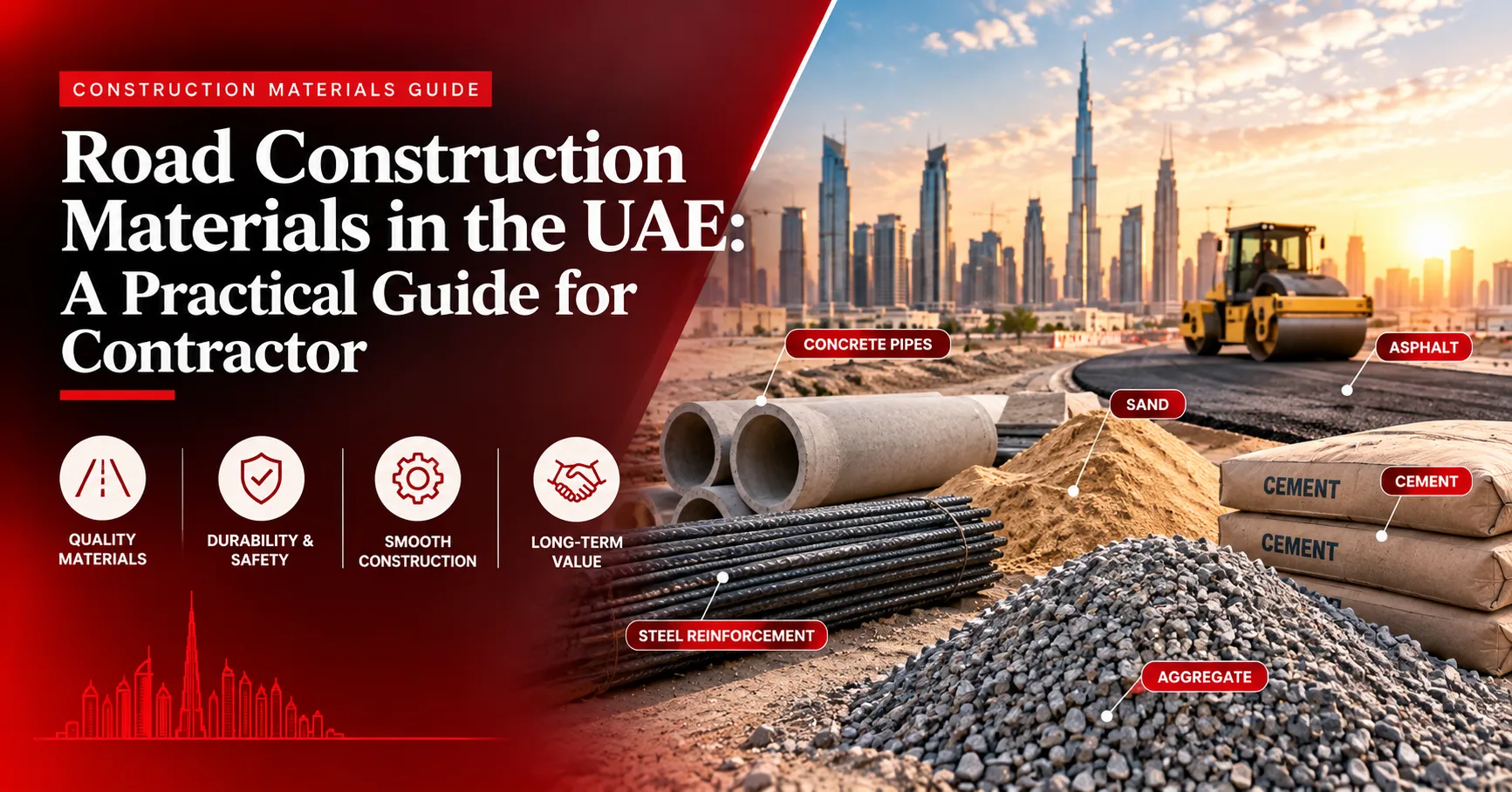
Road construction requires more than asphalt and heavy machinery. A properly planned road project depends on several materials working together, from the prepared ground and granular layers to the pavement and finishing elements.
For contractors in the UAE, selecting the right road construction material in UAE requires an understanding of the project’s design, traffic requirements, ground conditions, material specifications and applicable authority requirements. Materials used for a local access road may not be identical to those required for a major highway, industrial yard or infrastructure project.
Road construction specifications can also vary between emirates and individual projects. This makes it important for contractors and procurement teams to work from approved drawings, technical specifications and applicable authority requirements rather than relying on general assumptions.
This guide explains the main materials used in road construction, where they are used and what contractors should consider when planning material procurement in the UAE.
What Materials Are Used in Road Construction?
A road is normally constructed as a system of layers rather than as one single material.
Depending on the road design, common material categories can include:
- Fill and earthwork materials
- Subgrade improvement materials
- Granular sub-base
- Road base materials
- Coarse and fine aggregates
- Asphalt paving materials
- Mineral fillers
- Concrete
- Sand and other supporting materials
- Kerbs and related concrete products
The exact combination depends on the pavement design, site conditions, traffic loading and project specifications.
Contractors should therefore work from the approved drawings and technical specifications rather than selecting materials based only on general road construction practices.
1. Earthwork and Subgrade Materials
Before pavement layers are installed, the existing ground needs to be prepared.
This stage may involve excavation, grading, filling, levelling and compaction. Where the existing ground does not meet the required engineering conditions, additional treatment or suitable fill materials may be required.
The subgrade forms the foundation below the pavement structure, so its condition can affect the performance of the layers above it.
Depending on the site, contractors may need to address:
- Ground levels
- Soil conditions
- Moisture
- Compaction
- Drainage
- Weak areas
- Required formation levels
These requirements should be determined through the project’s engineering and site investigation process.
2. Sub-Base Materials
Sub-base is a granular layer positioned above the prepared subgrade and below the base course in many pavement systems.
It can provide additional support and help create a suitable platform for the upper pavement layers.
The material used for sub-base may include graded aggregates selected according to the project specification. ASTM D2940/D2940M covers quality-controlled graded aggregate materials intended for highway or airport bases and subbases and addresses characteristics and construction considerations associated with these materials.
The required sub-base material should therefore be selected according to the project’s approved specification rather than treated as a general aggregate requirement.
3. Road Base Materials
Road base is an important structural layer within many road pavement systems.
It is generally placed above the sub-base or prepared foundation and below the surface pavement layers. Road base materials may contain graded crushed stone, gravel and finer particles, depending on the required specification.
The purpose is to create a stable, compacted layer capable of supporting the pavement structure above it.
For contractors, road base procurement should consider:
- Required grading
- Material quality
- Layer thickness
- Compaction requirements
- Quantity
- Delivery schedule
- Project specifications
Road base should not be treated as interchangeable with every other type of aggregate or fill material.
For larger projects, it is also important to consider whether the supplier can maintain material availability and delivery capacity throughout the required construction stages.
4. Construction Aggregates
Aggregates are among the most widely used materials in road and civil construction.
They can include crushed stone, gravel and fine aggregate, with different sizes and grading depending on the application.
Aggregates may be used in:
- Road base
- Sub-base
- Asphalt mixtures
- Concrete
- Drainage layers
- Pavement-related works
- General civil construction
Different applications can require different aggregate characteristics. For example, material used for a road base may have different requirements from aggregate incorporated into an asphalt mixture or concrete.
This is why contractors should specify the intended application when ordering aggregate instead of simply requesting a general quantity of “stone.”
5. Asphalt Paving Materials
Asphalt is commonly used for paved road surfaces and consists of asphalt binder combined with mineral aggregates and, where required, other materials.
The aggregate portion is important because the grading and characteristics of the combined material affect the resulting asphalt mixture.
Road projects can use different asphalt courses according to the pavement design, such as base, binder and wearing courses.
The specific mix design, aggregate grading and performance requirements should be taken from the approved project specification.
Contractors should therefore coordinate asphalt material requirements with the project’s paving specifications rather than selecting materials based only on the intended road surface.
6. Fine Aggregate and Sand
Fine aggregate can form part of asphalt mixtures and may also be required for other construction activities associated with road projects.
Depending on the application, the material may need to meet specific requirements relating to grading, cleanliness and other physical characteristics.
Contractors should not assume that ordinary construction sand is automatically suitable for asphalt or pavement applications.
The project specification should determine the acceptable source and material characteristics.
7. Mineral Fillers
Mineral filler is a fine material that can be incorporated into certain bituminous paving mixtures when required by the mix design.
Its purpose is different from that of the main coarse and fine aggregate fractions.
Road specifications can define requirements for mineral filler relating to particle size distribution and material composition. For contractors, filler should therefore be procured according to the asphalt mix specification rather than treated as ordinary fine aggregate.
8. Concrete Materials for Road Infrastructure
Not every road project relies entirely on asphalt.
Concrete may be required for:
- Kerbs
- Drainage structures
- Culverts
- Concrete pavements
- Utility-related structures
- Foundations
- Roadside structures
- Footpaths and external areas
Cement, aggregates, sand and other concrete materials may therefore form part of the overall material procurement plan.
The concrete mix and material requirements should follow the project’s structural and technical specifications.
Road Construction Materials by Project Stage
Understanding materials by construction stage can make procurement easier.
Stage 1: Site Preparation
Initial work may involve:
- Excavation
- Filling
- Grading
- Levelling
- Ground preparation
- Compaction
The materials required depend on the existing site conditions and engineering design.
Stage 2: Subgrade and Sub-Base
Once the formation is prepared, suitable granular materials may be placed to create the required foundation layers.
The material must meet the project specification for grading and other required characteristics.
Stage 3: Base Course
The base course provides an important structural layer beneath the pavement.
Road base materials need to be properly placed and compacted according to the approved construction procedure.
For larger projects, procurement should be coordinated with the site programme so material arrives when grading and compaction activities are ready to proceed.
Stage 4: Asphalt or Other Pavement
Once the underlying layers meet the required conditions, the pavement surface can be constructed.
For asphalt roads, this can involve different asphalt courses depending on the design.
Stage 5: Finishing and Roadside Works
The final stages may include:
- Kerbs
- Drainage
- Footpaths
- Shoulders
- Road markings
- External works
- Landscaping-related construction
Different materials may be required for each of these activities.
Choosing Road Construction Materials in the UAE
Contractors should consider several factors before ordering road construction materials.
1. Follow the Project Specification
The project specification should be the starting point.
It may define:
- Material type
- Grading
- Strength
- Density
- Durability
- Test requirements
- Source requirements
- Acceptance criteria
A supplier should be given these requirements before the material is ordered.
2. Consider the Road Type
A residential access road, commercial parking area, industrial route and major infrastructure road may have very different loading and performance requirements.
The material selection should reflect the actual application and approved pavement design.
3. Consider Traffic Loading
Expected traffic is an important part of pavement design.
Roads carrying heavy trucks or frequent commercial traffic may require different pavement structures and material requirements than lightly trafficked access roads.
Contractors should rely on the approved pavement design rather than selecting materials based solely on the visible surface.
4. Check Aggregate Grading
Grading affects how aggregate materials perform within pavement and asphalt systems.
The required grading should be confirmed from the project’s technical documentation before procurement.
5. Check Material Quality
Depending on the application, relevant material characteristics may include:
- Particle size distribution
- Durability
- Cleanliness
- Plasticity
- Abrasion resistance
- Water absorption
- Soundness
- Other project-specific properties
The exact testing requirements vary according to the material and application.
6. Plan Quantity Carefully
Road projects can require substantial quantities of aggregates and other bulk materials.
Procurement teams should calculate requirements based on the project drawings, layer dimensions and approved material estimates.
Over-ordering can create storage and handling issues, while under-ordering can interrupt construction activities.
Why Material Delivery Matters in Road Construction
Road construction projects often operate according to a sequence. Materials need to reach the site when the relevant construction stage is ready.
For example, road base may need to be delivered before grading and compaction, while other pavement materials need to arrive according to the paving programme.
A delivery delay can affect equipment scheduling, labour allocation and subsequent construction activities.
For this reason, contractors should consider both material availability and delivery capacity when selecting a supplier.
For bulk construction requirements, logistics can be just as important as product availability. A supplier with an established delivery operation can help contractors plan multiple loads around site requirements.
Bulk Material Procurement for UAE Road Projects
Large road and civil projects may require repeated deliveries over several weeks or months.
Instead of treating every delivery as a separate purchase, contractors can plan procurement around the construction programme.
Useful information to provide to a supplier includes:
- Project location
- Material required
- Required grading or specification
- Estimated quantity
- Required delivery period
- Number of planned deliveries
- Site access conditions
- Contact details for site coordination
This gives the supplier a clearer understanding of the project requirement.
For contractors managing several material categories, working with a supplier that can support more than one construction material can also simplify procurement coordination.
Common Mistakes When Buying Road Construction Materials
Choosing Material Without Checking the Specification
A material can look suitable but still fail to meet the project’s required technical properties.
Always confirm the specification before ordering.
Treating All Aggregates as the Same
Aggregates used for concrete, asphalt, road base and general filling can have different requirements.
The application should always be specified.
Ignoring Delivery Planning
Bulk road materials require suitable transport and site coordination.
Late deliveries can affect construction sequencing and equipment utilisation.
Ordering Based Only on Unit Price
The lowest quoted price may not represent the lowest overall procurement cost if the material, quantity, testing or delivery does not meet the project requirement.
Not Planning Repeat Supply
Large projects may require the same material repeatedly.
Before starting procurement, confirm whether the supplier can maintain the required material availability throughout the project period.
How to Choose a Road Construction Material Supplier in the UAE
A reliable supplier should be able to discuss both the product and the logistics behind the order.
Before finalising a supplier, contractors can ask:
- What road construction materials are available?
- What aggregate sizes and grading options can be supplied?
- Can the supplier support bulk quantities?
- Is relevant material documentation available?
- Can deliveries be scheduled according to the project programme?
- Can repeat orders be supported?
- What other construction materials can be supplied from the same source?
- What delivery capacity is available for larger requirements?
For larger projects, a supplier capable of handling multiple material categories can simplify procurement coordination.
Road Construction Material Supply in Dubai and the UAE
Road and civil construction projects across the UAE require different combinations of materials depending on their design and location.
Falcon Fame Trading supplies construction materials from its base in Al Quoz Industrial Area 3, Dubai, supporting contractors, developers, technical service providers and other construction-related businesses.
Its material range includes road base, construction aggregates, cement, concrete blocks, dry mix, sand bags, gypsum products and construction boards.
This broader product range allows contractors to discuss different material requirements through one construction material supplier, depending on their project needs.
Falcon Fame Trading has 36+ years of experience, 30+ delivery vehicles, 3–45 CBM delivery capacity and 24/7 operational capability. These capabilities support procurement and delivery requirements where bulk material movement and scheduling are important.
For road-related requirements, contractors can share the required material specification, estimated quantity, project location and delivery schedule so the appropriate supply arrangement can be discussed.
What to Include in a Road Material Enquiry
A detailed enquiry can help reduce unnecessary back-and-forth with the supplier.
Include:
Material: Road base, aggregate, sand or another required material
Application: Road, parking area, industrial yard, civil works or another use
Specification: Required grading or project specification
Quantity: Estimated tonnes, cubic metres or required loads
Location: Project or site delivery address
Schedule: Required delivery date or project duration
Additional requirements: Testing, documentation or repeat deliveries
The more clearly the requirement is communicated, the easier it becomes to plan supply.
Need Road Construction Materials in the UAE?
If you are planning a road or civil construction project, start by identifying the material requirements from the approved project documents.
Then compare suppliers based on product suitability, availability, quantity capacity, documentation and delivery capability.
Falcon Fame Trading can support contractors with road base, aggregates and other construction materials required across different stages of construction. With its Dubai base, broad material range and established delivery operation, the company can discuss supply requirements for projects across Dubai and the UAE.
When making an enquiry, providing the material specification, estimated quantity, project location and expected delivery schedule can help the procurement process move more efficiently.
Conclusion
Road construction depends on a combination of materials rather than a single product. Sub-base, road base, aggregates, asphalt-related materials, sand, mineral fillers and concrete products can all play different roles within a road or civil construction project.
For contractors looking for road construction material in UAE, the most important consideration is matching the material to the approved project requirement. Grading, quality, traffic loading, pavement design, quantity, testing and delivery planning all need to be considered before procurement.
Because road specifications can vary by emirate and project, contractors should follow the applicable authority requirements and approved technical documentation rather than relying on one generic material specification.
A supplier that can provide suitable materials along with dependable bulk delivery support can also make procurement easier for contractors managing multiple construction stages.
With 36+ years of experience, 30+ delivery vehicles and 24/7 operational capability, Falcon Fame Trading supports road base, aggregates and wider construction material requirements across Dubai and the UAE.
The right material selection, proper testing, approved construction practices and well-planned delivery can help contractors maintain a more organised supply process throughout road and civil construction projects in the UAE.
Frequently Asked Questions
1. What are the main road construction materials used in the UAE?
Common material categories include sub-base, road base, aggregates, asphalt-related materials, fine aggregate, mineral fillers, concrete and other materials required for drainage, kerbs and roadside construction. The exact materials depend on the project design and specification.
2. What is the difference between road base and sub-base?
Sub-base is generally positioned above the prepared subgrade and below the base course, while road base forms a higher structural layer beneath the pavement. The exact pavement arrangement depends on the project’s engineering design.
3. How do I choose road construction materials for a UAE project?
Start with the approved project specification. Consider the road type, expected loading, material grading, quality requirements, quantity, testing requirements and delivery schedule before selecting a supplier.
4. Why is aggregate grading important in road construction?
Grading describes the distribution of particle sizes within an aggregate and is an important consideration in pavement and asphalt applications. Different road construction uses can require different grading requirements.
5. Where can contractors source road construction materials in the UAE?
Contractors can source materials from construction material suppliers that can support the required product specifications, quantities and delivery locations. Before ordering, confirm the material requirements, available quantity, documentation and delivery capability. Falcon Fame Trading supplies road base, aggregates and other construction materials from Dubai for projects across Dubai and the UAE.