Construction aggregates are among the basic materials used across residential, commercial, industrial, road and infrastructure projects. From concrete production and foundations to road works and general civil construction, the right aggregate can influence how a project performs and how efficiently materials are used.
In Dubai, contractors and procurement teams may need different aggregate types depending on the application, required grading, project specifications and quantity. Choosing an aggregate is therefore not simply about finding available stone or sand. The material needs to match the intended use and the technical requirements of the project.
ASTM C33/C33M covers requirements for the grading and quality of fine and coarse aggregates used in concrete, showing why characteristics such as grading and material quality need to be considered during procurement.
For projects requiring regular or bulk material supply, delivery capability is also an important consideration. FALCON FAME TRADING supplies construction aggregates along with a wider range of construction materials across Dubai and the UAE, supporting contractors, developers, technical service providers and other construction-related businesses.
This guide explains the common types of construction aggregates, their applications and the factors contractors should consider when sourcing aggregates in Dubai.
What Are Construction Aggregates?
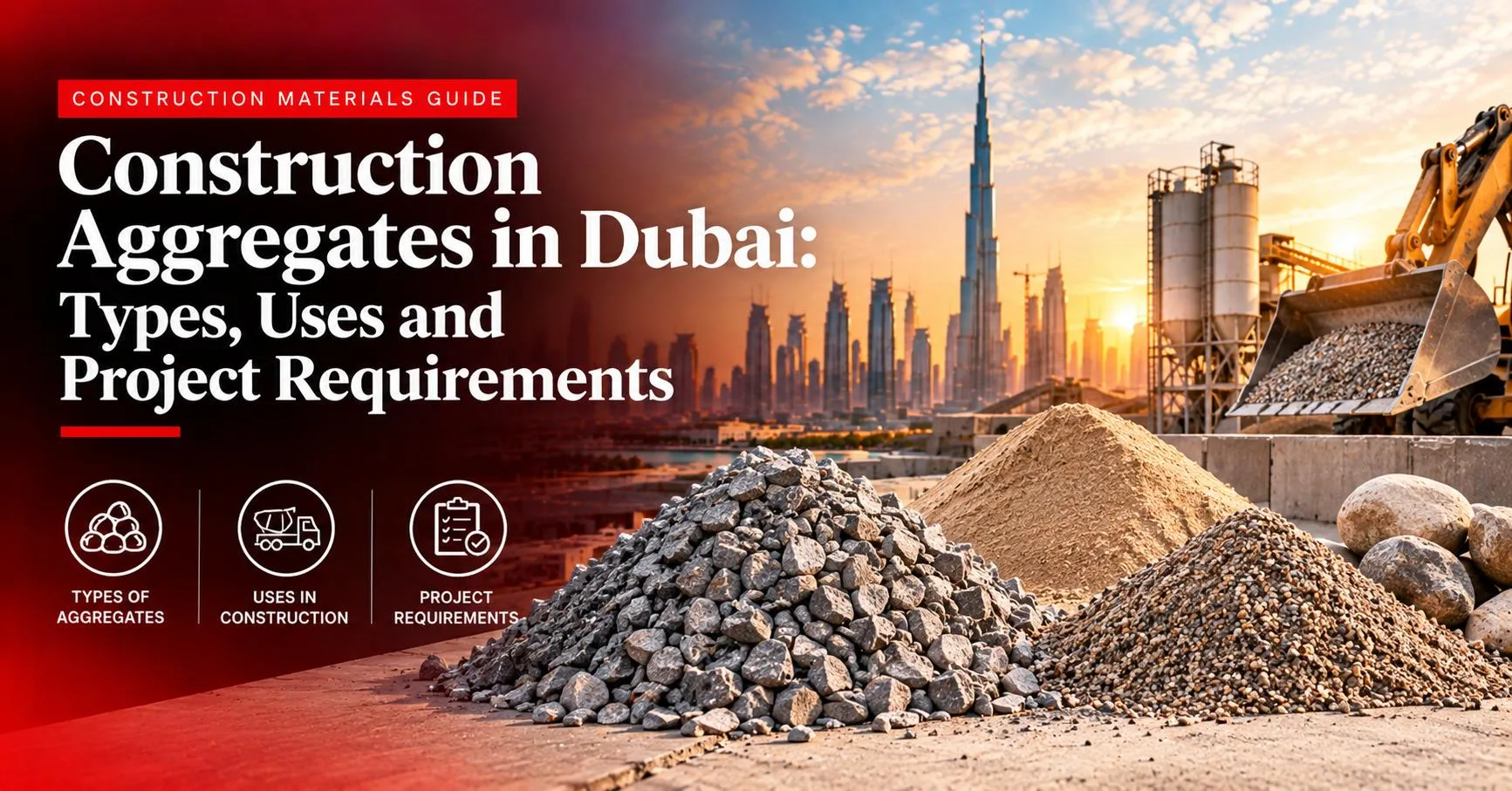
Construction aggregates are granular materials used in a wide range of construction and civil engineering applications. Depending on the project, aggregates can include materials such as sand, gravel and crushed stone.
For concrete applications, aggregates are generally classified as either fine or coarse. Fine aggregate can include natural or manufactured sand, while coarse aggregate can include gravel, crushed gravel and crushed stone.
The required type depends on the construction application, mix design, grading requirements and project specifications.
Main Types of Construction Aggregates
Different construction projects require different aggregate characteristics. Understanding the basic categories can make procurement easier.
Fine Aggregate
Fine aggregate generally consists of smaller particles and is commonly used in concrete and mortar applications.
Natural sand and manufactured sand are examples of fine aggregate. Their grading and cleanliness can be important when they are used as part of a concrete mix. ASTM C33/C33M includes requirements relating to grading and quality for fine aggregate used in concrete.
Fine aggregates may be required for:
- Concrete production
- Mortar
- Masonry work
- Plastering-related applications
- General construction mixes
The exact material specification should always follow the project requirements.
Coarse Aggregate
Coarse aggregate consists of larger particles and is commonly used in concrete and other structural applications.
Typical materials can include:
- Crushed stone
- Gravel
- Crushed gravel
- Other approved coarse aggregate materials
The size and grading of coarse aggregate can vary according to the concrete mix and project requirements. ASTM C33/C33M allows project specifications to define nominal maximum aggregate size and other grading requirements.
Crushed Stone
Crushed stone is produced by mechanically crushing suitable rock into controlled sizes. It is widely used in concrete, road works, foundations and civil construction.
Different sizes can be selected depending on the application and project specification.
Gravel
Gravel consists of naturally occurring or processed rounded aggregate particles and can be used in selected concrete and construction applications.
Whether gravel or crushed aggregate is appropriate depends on the project design and material specification.
Recycled Aggregate
Some projects may permit the use of recycled aggregate produced from processed construction materials. However, suitability depends on the project requirements and applicable specifications.
Recycled materials should not be substituted for specified aggregates without confirming that they meet the required performance and project standards.
Where Are Construction Aggregates Used?
Aggregates have applications across almost every major area of construction.
Concrete Production
Concrete is one of the most important applications for aggregates. Fine and coarse aggregates form a significant part of a concrete mixture and are combined with cementitious materials and water according to the required mix design.
The aggregate grading, quality and size need to be suitable for the intended concrete application. ASTM C33/C33M provides requirements for fine and coarse aggregate used in concrete.
For contractors, this means the aggregate should be sourced according to the concrete specification rather than selected only on availability.
Foundations and Structural Work
Aggregates are used in concrete for foundations, slabs, columns, beams and other structural elements.
The specific aggregate requirements depend on the structural design and concrete mix. Larger projects may have clearly defined requirements for aggregate size, grading, cleanliness and other properties.
Road Construction
Aggregates are essential in many road and civil construction activities.
They may be used in:
- Road base and sub-base applications
- Pavement-related works
- Drainage layers
- Ground preparation
- Civil infrastructure
Road projects often require specific material sizes and grading, so contractors should follow the project specification when selecting aggregate.
Drainage Applications
Selected aggregates can be used in drainage layers where water movement through a granular material is required.
The appropriate material depends on the drainage design, particle size and site conditions. Contractors should confirm the required specification before ordering.
Backfilling and Ground Preparation
Certain aggregate materials can be used for site preparation, filling and other civil works.
The suitable material depends on the engineering requirements of the project. Aggregate intended for concrete should not automatically be assumed to be suitable for every filling or ground-preparation application.
Landscaping and External Works
Aggregates can also be used in selected landscaping, pathways, external surfaces and decorative applications.
In these cases, appearance, particle size and colour may become more important alongside technical requirements.
Why Aggregate Grading Matters
Grading refers to the distribution of particle sizes within an aggregate material.
It matters because the particle-size distribution affects how the aggregate fits together and how it performs within a particular application.
For concrete, grading is one of the characteristics addressed by ASTM C33/C33M. The standard also recognises that project specifications may define nominal maximum aggregate size and other specific grading requirements.
For contractors, the practical point is simple: do not order aggregate based only on a general description such as “stone” or “sand.”
The supplier should know:
- Required aggregate type
- Required size
- Application
- Quantity
- Project specification
- Delivery location
Providing these details before ordering can help ensure that the material requirement is understood correctly.
What to Consider When Buying Construction Aggregate in Dubai
Choosing a suitable construction aggregate starts with understanding the project requirement.
1. Identify the Application
First determine where the aggregate will be used.
Is it required for concrete, road construction, drainage, foundations, filling or another application?
The answer will help determine which material is appropriate.
2. Confirm the Required Size
Aggregate is available in different particle sizes. The required size should be based on the project specification and intended application.
For concrete, the nominal maximum aggregate size can form part of the project specification.
3. Check Grading Requirements
Grading should be suitable for the intended application. If the project specifies a particular grading range, the supplier should be able to provide material matching that requirement.
4. Consider Material Quality
Quality is more than appearance. Depending on the application, relevant characteristics may include grading, cleanliness, durability and other specified physical or chemical properties.
ASTM C33/C33M includes several quality-related requirements and test considerations for aggregates used in concrete.
5. Confirm Quantity
Aggregate is often required in significant quantities for construction projects.
Before ordering, calculate the required quantity based on project drawings, material estimates or the responsible engineer’s specifications.
For larger projects, it is also useful to discuss phased deliveries rather than ordering everything at once if site storage is limited.
6. Check Availability
A material may meet the technical requirement but still create project delays if it is not available when needed.
Before placing a large order, confirm:
- Available quantity
- Aggregate type
- Size
- Delivery schedule
- Supply capacity
- Repeat-order availability
For projects with ongoing aggregate requirements, consistency of supply should be considered during procurement planning.
7. Consider Delivery Requirements
Aggregates are typically supplied in bulk, so delivery planning matters.
The supplier should understand the site location, required quantity, unloading arrangements and preferred delivery schedule.
For projects in Dubai, local delivery capability can help contractors coordinate aggregate supply with ongoing site activities.
Construction Aggregate for Different Project Types
Different projects can have very different aggregate requirements.
Residential Projects
Residential construction may require aggregates for concrete, foundations, slabs, block-related work, external areas and general civil requirements.
The quantity may be smaller than a large infrastructure project, but consistent supply is still important.
Commercial Construction
Commercial buildings may require aggregates for foundations, structural concrete, slabs, parking areas, external works and other construction stages.
Large commercial projects often involve scheduled material procurement, making reliable supply and delivery important.
Industrial Projects
Industrial facilities can involve substantial concrete and civil construction requirements. Aggregate may be required across foundations, structural elements, yards, access areas and associated infrastructure.
Project specifications should guide the material selection throughout the work.
Road and Infrastructure Projects
Road and infrastructure projects can require large quantities of aggregate for different layers and construction activities.
The required material can vary depending on the road design, pavement system and engineering specifications. Contractors should therefore procure each material according to its specified application.
For projects with substantial material requirements, delivery planning should be considered alongside technical material selection.
Construction Aggregate vs Road Base
Construction aggregate and road base are related but should not automatically be treated as the same material.
Aggregates can be used in concrete and various construction applications, while road base is specifically supplied for road and civil construction requirements.
The required grading, material characteristics and application can differ.
If a project specifies road base, the contractor should source material that meets the roadwork requirement rather than substituting another aggregate simply because it is available.
Common Mistakes When Buying Aggregate
A few simple procurement mistakes can create unnecessary problems on a construction site.
Buying Only on Price
The cheapest aggregate is not necessarily the most suitable. Material quality, grading, quantity, delivery and project compliance should also be considered.
Ordering the Wrong Size
Aggregate sizes are not interchangeable for every application. Ordering the wrong size can create problems with concrete production or other construction work.
Ignoring the Project Specification
If the engineer, consultant or project documentation specifies particular aggregate requirements, those requirements should be confirmed before ordering.
Not Planning Delivery
Large aggregate orders require appropriate delivery planning. Delays can affect concrete production, roadwork and other site activities.
Ordering Without Confirming Quantity
Under-ordering can interrupt work, while excessive ordering can create unnecessary storage requirements.
A clear material estimate and delivery plan can make procurement more efficient.
How a Construction Material Supplier Can Support Your Project
Working with an experienced construction material supplier can simplify aggregate procurement, especially when a project requires several materials from the same source.
A supplier can help coordinate:
- Aggregate requirements
- Available material sizes
- Quantity planning
- Delivery schedules
- Bulk supply
- Other construction materials
For contractors managing multiple materials, having a supplier that can support broader procurement requirements can reduce unnecessary coordination between different vendors.
This can be particularly useful for projects where aggregates are required alongside cement, concrete blocks, dry mix, road base, sand bags or gypsum products.
Construction Aggregate Supply in Dubai
Dubai construction projects can range from residential developments and commercial buildings to industrial facilities, infrastructure and civil works. Each project can have different aggregate requirements based on its design and construction stage.
FALCON FAME TRADING supplies construction aggregates as part of its broader construction material range in Dubai and the UAE. Operating from Al Quoz Industrial Area 3, Dubai, the company supports contractors, developers, technical service providers and other construction-related businesses with material procurement and delivery.
Along with aggregates, its material range includes:
- Cement
- Solid and hollow concrete blocks
- Dry mix and mortar
- Sand bags
- Road base
- Gypsum products
- Cement boards
- MDF boards
With 36+ years of experience, 30+ delivery vehicles, delivery capacity ranging from 3 to 45 CBM, and 24/7 delivery operations, FALCON FAME TRADING supports construction material requirements for different project sizes across Dubai and the UAE.
For contractors handling ongoing projects, these capabilities can be relevant when aggregate or other construction materials need to be delivered according to a planned schedule.
Questions to Ask an Aggregate Supplier
Before placing an order, contractors can ask:
- What aggregate types are available?
- What sizes or grading options are available?
- Is the material suitable for my intended application?
- What quantity can you supply?
- Is bulk supply available?
- What is the expected delivery schedule?
- Can the same specification be supplied for repeat orders?
- Are relevant product or material details available?
- Can aggregate be delivered along with other required construction materials?
Providing clear project information helps the supplier respond with a more suitable material and delivery plan.
Need Construction Aggregate for Your Project?
If you are sourcing construction aggregate in Dubai, start with the project requirement rather than the product name alone.
Share the application, required aggregate type or grading, estimated quantity and delivery location with your supplier. This makes it easier to identify the appropriate material and plan delivery.
FALCON FAME TRADING supports construction material procurement across Dubai and the UAE, including construction aggregates, cement, blocks, dry mix, road base, sand bags, gypsum products and construction boards.
For larger requirements, customers can also discuss delivery capacity, project schedules and multiple material requirements with the Falcon team before finalising procurement.
Conclusion
Construction aggregates are fundamental to concrete, road works, foundations, civil construction and many other project activities. Fine aggregate, coarse aggregate, crushed stone and gravel can serve different purposes, while specific project requirements determine the appropriate material.
When buying construction aggregate, contractors should consider the application, aggregate size, grading, material quality, quantity, availability and delivery requirements. For concrete applications in particular, grading and quality requirements should be aligned with the relevant project specification and applicable standards.
For construction projects in Dubai, reliable aggregate supply can also help maintain continuity between different stages of work. Working with a supplier that can manage both material requirements and delivery can make procurement more straightforward, particularly for projects requiring regular or bulk quantities.
FALCON FAME TRADING supplies construction aggregates along with a wider range of construction materials across Dubai and the UAE. With 36+ years of experience, 30+ delivery vehicles, 3–45 CBM delivery capacity and 24/7 operations, the company supports contractors and project teams with material procurement and delivery requirements.
Frequently Asked Questions
1. What are construction aggregates used for?
Construction aggregates are used in concrete, foundations, road construction, drainage, ground preparation, civil works and other construction applications. The suitable aggregate depends on the specific project requirement.
2. What is the difference between fine and coarse aggregate?
Fine aggregate generally consists of smaller particles such as natural or manufactured sand, while coarse aggregate includes larger materials such as gravel and crushed stone. Their use depends on the project and mix requirements.
3. How do I choose the right construction aggregate?
Consider the intended application, required size, grading, quality requirements, quantity and project specifications. For concrete, the aggregate should meet the requirements specified for the particular mix and application.
4. Can the same aggregate be used for concrete and road construction?
Not necessarily. Different applications can require different aggregate sizes, grading and material characteristics. Always check the project specification before using one aggregate for another application.
5. Where can I buy construction aggregate in Dubai?
Construction aggregates can be sourced from building material suppliers in Dubai. Before ordering, confirm the aggregate type, size, grading, available quantity and delivery requirements with the supplier. FALCON FAME TRADING supplies construction aggregates along with other construction materials across Dubai and the UAE.