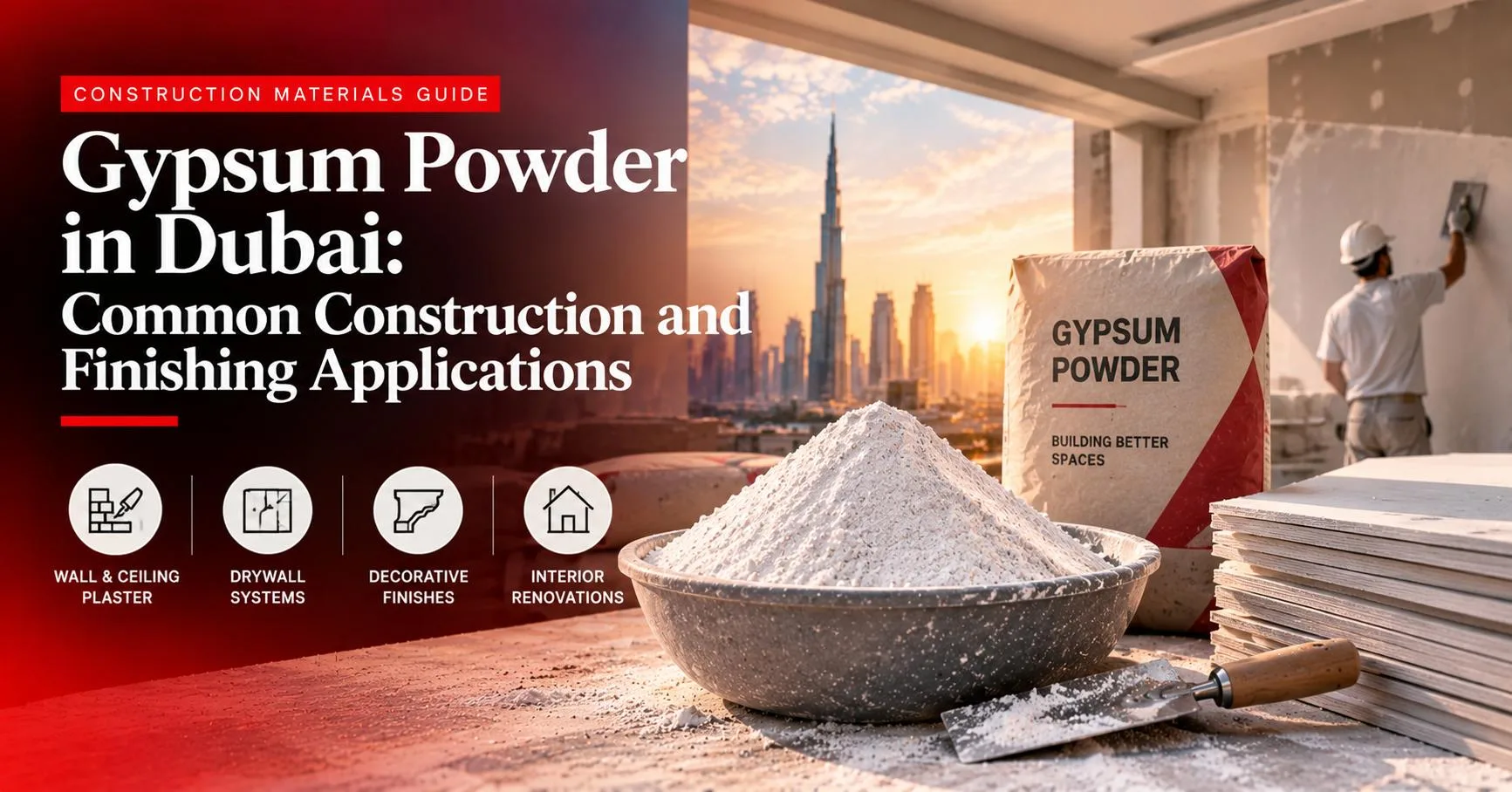
Gypsum is widely used in modern construction, particularly for interior finishing, plastering, decorative work, and gypsum-based building products. Because it can be processed into different forms and formulations, gypsum-based materials are used across residential, commercial, hospitality, office, and fit-out projects.
For contractors and procurement teams looking for a gypsum powder supplier in Dubai, the important question is not simply where to buy gypsum powder. It is understanding which type is suitable for the intended application, how it should be handled, and what product and supply details should be confirmed before placing an order.
For projects where gypsum powder is required alongside other construction materials, working with a supplier such as FALCON FAME TRADING can also make procurement more convenient by bringing multiple material requirements together.
From internal wall plastering to decorative elements and gypsum board production, gypsum powder can support several stages of construction and finishing work.
What Is Gypsum Powder?
Gypsum powder is a finely processed gypsum-based material used in various construction and manufacturing applications.
Depending on its formulation and intended use, gypsum can be processed for plastering, moulding, board production, decorative applications, and other building-material requirements.
Gypsum plasters are covered by dedicated standards. ASTM C28/C28M-26, for example, covers gypsum mill-mixed plaster, gypsum neat plaster, gypsum wood-fibered plaster, and gypsum gauging plaster.
This means that “gypsum powder” should not automatically be treated as one universal product. The required characteristics depend on what the material is going to be used for.
Why Is Gypsum Used in Construction?
Gypsum is popular for interior construction and finishing because gypsum-based products can be formulated for different applications.
It can be used to create plastering materials, decorative components, boards, ceiling products, and other interior solutions.
Its use also depends on the building design, substrate, environmental conditions, and requirements of the particular application.
For contractors, selecting the right product is therefore more important than simply choosing gypsum based on price.
A clear discussion with the supplier about the application can help avoid ordering a product that does not match the project’s requirements.
Common Applications of Gypsum Powder
Gypsum powder can be used in several construction and finishing applications. The exact use depends on the grade, formulation, and manufacturer’s recommendations.
1. Internal Wall Plastering
One of the common uses of gypsum-based materials is interior wall plastering.
Gypsum plaster can be applied to suitable interior substrates to create a smoother and more uniform surface before further finishing.
ASTM C842 covers requirements for full-thickness interior gypsum plastering on suitable gypsum, metal, masonry, or monolithic concrete bases. It also states that gypsum plasters covered by the specification are not intended for exterior locations or interior wet areas.
For this reason, contractors should check the intended application and site conditions before selecting a gypsum plaster product.
2. Ceiling Finishing
Gypsum-based materials can also be used in interior ceiling applications.
They may form part of plastering, ceiling finishing, or gypsum-based systems depending on the project design.
For commercial offices, residential interiors, hotels, and fit-out projects, gypsum products may be selected to achieve a clean and finished interior appearance.
The specific material should be chosen according to the ceiling system and application requirements.
3. Wall Surface Finishing
Gypsum-based plaster can be used to prepare and finish interior wall surfaces.
A properly selected and applied gypsum plaster can help create a suitable surface for subsequent decorative or paint finishes.
Surface preparation remains important. Dust, unsuitable substrates, moisture, and poor application practices can affect the final result.
4. Decorative Mouldings and Architectural Details
Gypsum powder is also used in decorative construction applications.
Depending on the formulation, gypsum can be used to produce decorative elements such as mouldings, cornices, arches, columns, and other interior features.
These applications are particularly relevant to projects where architectural detailing is an important part of the interior design.
Gypsum-based materials are also used in decorative and moulded applications where the project requires specific shapes and finishes.
5. Gypsum Board and Drywall Manufacturing
Gypsum is an important raw material in the manufacture of gypsum boards and drywall products.
Gypsum powder can be processed and incorporated into board products used for interior walls, ceilings, partitions, and related construction systems.
However, contractors purchasing loose gypsum powder should not assume that every gypsum powder product is intended for board manufacturing. The grade and specification must match the manufacturing requirement.
6. Ceiling Tile Production
Gypsum-based materials are also used in the production of certain ceiling tiles and interior ceiling products.
These applications require controlled material properties because the finished product needs to meet the requirements of its intended system.
For manufacturers, product consistency and technical specifications can therefore be more important than simply comparing the price per bag.
7. Repair and Patching Work
Selected gypsum-based products can be used for interior repair and patching applications.
These may include repairing small surface imperfections or preparing certain areas before finishing.
The material should be appropriate for the depth, substrate, location, and type of repair.
A product intended for general plastering should not automatically be assumed to be suitable for every repair application.
Gypsum Powder for Residential Construction
Residential projects often require gypsum-based products during the finishing stage.
Villas, apartments, houses, and residential developments may use gypsum materials for:
- Interior wall plastering
- Ceiling work
- Decorative mouldings
- Surface finishing
- Gypsum board systems
- Interior repairs
The requirement can vary significantly from one project to another.
A villa renovation, for example, may require a smaller quantity for selected areas, while a large residential development may require planned and repeated deliveries throughout the finishing schedule.
For projects where gypsum is required alongside cement, blocks, dry mix, aggregates, or other materials, coordinating the requirements with one construction material supplier can also simplify procurement.
Gypsum Powder for Commercial Projects
Commercial buildings can have more extensive interior finishing requirements.
Offices, retail spaces, hotels, restaurants, warehouses with finished interiors, and other commercial properties may require gypsum-based products as part of their construction or fit-out work.
For these projects, procurement teams should consider the project specification, application, required quantity, delivery schedule, storage conditions, and approval requirements before confirming the material.
Large projects may also require a reliable supply arrangement rather than one-time purchasing.
This is where supplier capacity becomes an important consideration. The supplier should be able to understand the required quantity and expected delivery schedule before the order is finalised.
Gypsum Powder for Renovation and Fit-Out Projects
Renovation and fit-out work often involves existing walls, ceilings, partitions, and interior surfaces.
Gypsum products can be useful for selected finishing and repair requirements where the substrate and site conditions are suitable.
However, renovation work can involve unexpected substrate conditions.
Before selecting a gypsum product, contractors should check whether the existing surface is suitable and whether any preparation is required before application.
For fit-out projects with changing requirements, it can also be useful to discuss expected quantities and delivery schedules with the supplier in advance.
What Are the Benefits of Using Gypsum-Based Materials?
The benefits depend on the particular gypsum product and application, but several characteristics make gypsum-based materials useful for interior construction.
Smooth Interior Finishes
Gypsum plaster can be used to create a smooth interior surface when correctly selected and applied.
This makes it suitable for walls and ceilings that will later receive paint or other decorative finishes.
Workability
Certain gypsum plaster formulations are designed to provide workable material for interior application.
The actual working characteristics depend on the formulation, mixing method, environmental conditions, and application process.
Suitable for Decorative Applications
Gypsum can be shaped and processed for various decorative elements.
This makes it useful in projects where interior design includes mouldings, architectural details, or decorative ceiling features.
Multiple Product Applications
Gypsum is not limited to one construction use.
It can be used across plastering, finishing, boards, ceiling products, decorative work, and other applications, depending on the grade and formulation.
This wide range of potential applications is one reason why contractors should identify the exact product requirement before purchasing.
How to Choose Gypsum Powder for a Construction Project
Choosing gypsum powder should begin with the intended application.
Identify the Application
First, explain what the material will be used for.
For example:
- Interior wall plastering
- Ceiling work
- Decorative moulding
- Repair and patching
- Board manufacturing
- Other gypsum-based applications
This helps the supplier identify the appropriate product.
Check the Project Specification
Commercial construction and fit-out projects may have specifications provided by consultants, architects, engineers, or project managers.
The selected gypsum product should comply with the applicable project requirements.
Do not replace a specified product with another material simply because it appears similar.
Consider the Substrate
The surface receiving gypsum plaster matters.
Masonry, concrete, gypsum-based substrates, and other surfaces may require different preparation or application methods.
ASTM C842 specifically addresses gypsum plaster application over suitable gypsum, metal, masonry, and monolithic concrete bases.
Consider the Environment
Gypsum plaster is primarily associated with suitable interior applications.
It should not be treated as a universal material for exterior or wet-area use. ASTM C842 specifically states that gypsum plasters covered by the specification are not intended for exterior locations or interior wet areas.
For bathrooms, wet areas, exposed external surfaces, or other challenging environments, the project specification should determine the appropriate material system.
Confirm the Product Grade
Ask the supplier for the product details and intended application.
A gypsum powder intended for plastering may have different requirements from material used for decorative moulding or manufacturing.
This simple check can prevent unsuitable material from reaching the project site.
What Should You Check When Buying Gypsum Powder in Dubai?
When comparing a gypsum powder supplier in Dubai, look beyond the quoted price.
Product Specification
Ask for the relevant product information and confirm that it matches the intended application.
Quantity and Packaging
Confirm the available bag size, total quantity, and number of bags required for the project.
For large projects, discuss whether the supplier can maintain supply as the work progresses.
Material Condition
Gypsum products need proper protection from moisture.
The material should be delivered in suitable packaging and stored according to the manufacturer’s instructions.
Delivery Requirements
For Dubai construction projects, delivery timing can affect site productivity.
Confirm:
- Project location
- Required delivery date
- Quantity per delivery
- Site access
- Unloading arrangements
- Future delivery requirements
Supply Capacity
If the project requires repeated gypsum deliveries, ask whether the supplier can support the expected volume throughout the project schedule.
This is particularly important for commercial construction and large fit-out projects.
A supplier with a broader construction material range can also be useful when gypsum powder needs to be procured together with other materials.
How Should Gypsum Powder Be Stored?
Gypsum-based materials should be kept dry and protected from moisture.
ASTM C842 states that plaster and other cementitious materials should be kept dry until use and stored off the ground, under cover, and away from condensation and damp surfaces.
At a construction site, this means the storage area should be:
- Dry
- Covered
- Protected from water
- Away from damp walls
- Suitable for organised material handling
Avoid leaving bags directly on wet floors or in locations exposed to rain or water.
Proper storage helps maintain the material’s condition until it is required for application.
Gypsum Powder vs Gypsum Board
Gypsum powder and gypsum board are related but different products.
Gypsum powder is a loose powdered material used for applications such as plastering, moulding, manufacturing, and other gypsum-based requirements.
Gypsum board is a manufactured panel product used for walls, ceilings, partitions, and interior systems.
The two should not be treated as interchangeable.
If a project specification calls for gypsum board, purchasing loose gypsum powder will not provide the same construction system.
Similarly, a project requiring gypsum plaster may need a suitable powder or plaster formulation rather than a board product.
Why Supplier Selection Matters When Buying Gypsum Powder
Construction material procurement is not only about getting a product at the lowest price.
A reliable supplier can help simplify the process by providing information about product availability, packaging, quantity, delivery, and the intended application.
For larger projects, supplier reliability becomes even more important because material shortages or delayed deliveries can affect the construction schedule.
When selecting a gypsum powder supplier in Dubai, contractors should therefore consider:
- Product suitability
- Product availability
- Supply capacity
- Packaging
- Delivery arrangements
- Communication
- Wider material requirements
If the same project also requires cement, blocks, dry mix, aggregates, sand bags, road base, or boards, sourcing several materials through one supplier can make procurement coordination easier.
Gypsum Powder Supply from FALCON FAME TRADING
FALCON FAME TRADING supplies gypsum powder and gypsum products as part of its construction material range in Dubai and the UAE.
The company works with contractors, developers, technical service providers, and other construction-related businesses for material procurement and delivery requirements.
Its broader product range includes:
- Cement
- Solid and Hollow Concrete Blocks
- Dry Mix and Mortar
- Aggregates
- Sand Bags
- Gypsum Powder and Gypsum Products
- Road Base
- Cement Boards
- Gypsum Boards
- MDF Boards
Based in Al Quoz Industrial Area 3, Dubai, FALCON FAME TRADING has 36+ years of experience in construction material supply, operates with 30+ delivery vehicles, and provides 24/7 delivery operations.
Its delivery capability ranges from 3 CBM to 45 CBM, supporting different project sizes and material delivery requirements.
For a gypsum powder requirement, customers can provide the intended application, quantity, project location, and delivery schedule so the material requirement can be discussed clearly.
This approach is particularly useful for larger projects where gypsum products form part of a wider construction material procurement plan.
Planning Gypsum Powder Supply for a Large Project
Large construction and fit-out projects benefit from planning gypsum requirements before the finishing stage becomes active.
Start by identifying the areas where gypsum powder or gypsum-based products will be required.
Then consider:
- Product type
- Intended application
- Quantity
- Packaging
- Storage capacity
- Delivery frequency
- Construction schedule
If the project is expected to require repeated deliveries, discuss future supply requirements with the supplier rather than arranging every order at the last minute.
For projects sourcing several construction materials, coordinating gypsum powder requirements with cement, blocks, dry mix, aggregates, or other materials can also make procurement more organised.
Questions to Ask a Gypsum Powder Supplier in Dubai
Before placing an order, contractors can ask:
What application is the gypsum powder intended for?
This is the first step in selecting the appropriate product.
What product specification should be followed?
Confirm the technical requirements for the project and whether any consultant or project specification applies.
What packaging sizes are available?
This helps with quantity planning and storage.
How should the material be stored?
Confirm the recommended storage conditions before delivery and prepare a suitable dry storage area.
Can the required quantity be supplied on schedule?
For larger projects, discuss current availability as well as future supply requirements.
Can delivery be arranged to the project site?
Confirm the delivery location, schedule, access, and unloading requirements.
A Practical Checklist Before Ordering Gypsum Powder
Before confirming your gypsum powder requirement, check:
- Is the intended application clearly defined?
- Is the product specification suitable?
- Is the substrate appropriate for the intended use?
- Are there any special project requirements?
- Is the required quantity calculated?
- Are the packaging sizes suitable?
- Is dry storage available at the site?
- Can the supplier support the required quantity?
- Is the delivery schedule suitable?
- Are future deliveries likely to be required?
Providing these details to the supplier can make the quotation and procurement process more straightforward.
Why FALCON FAME TRADING Can Support Gypsum Requirements
For contractors looking for a gypsum powder supplier in Dubai, supplier capability is important beyond simply finding the product.
FALCON FAME TRADING supports construction material procurement with:
- 36+ years of experience in construction material supply
- Gypsum powder and gypsum products
- A broad range of construction materials
- 30+ delivery vehicles
- 3–45 CBM delivery capacity
- 24/7 delivery operations
- Supply support from Al Quoz Industrial Area 3, Dubai
- Support for contractors, developers, technical service providers, and other construction-related businesses
This wider supply capability can be useful when gypsum requirements need to be coordinated with other materials for the same construction or fit-out project.
Conclusion
Gypsum powder has an important role in construction and interior finishing, with applications ranging from internal wall plastering and ceiling work to decorative mouldings, gypsum board production, and selected repair applications.
However, not every gypsum powder product is designed for every use. The right material depends on the intended application, substrate, project specification, environmental conditions, product formulation, and required quantity.
For contractors searching for a gypsum powder supplier in Dubai, the best starting point is to clearly define the application and then confirm the product specification, packaging, storage requirements, availability, and delivery schedule.
FALCON FAME TRADING supplies gypsum powder and gypsum products along with cement, concrete blocks, dry mix and mortar, aggregates, sand bags, road base, and construction boards for residential, commercial, industrial, renovation, and fit-out requirements across Dubai and the UAE.
With 36+ years of experience, 30+ delivery vehicles, 3–45 CBM delivery capacity, and 24/7 delivery operations, FALCON FAME TRADING supports construction material procurement for different project requirements.
By sharing the application, quantity, project location, and delivery schedule before ordering, contractors can make gypsum procurement more organised and ensure that the selected material is aligned with the actual construction requirement.
Frequently Asked Questions
1. What is gypsum powder used for in construction?
Gypsum powder can be used for interior plastering, wall and ceiling finishing, decorative mouldings, gypsum-based products, board manufacturing, and selected repair applications, depending on the product formulation.
2. Can gypsum powder be used for exterior walls?
Gypsum plaster should not automatically be used for exterior applications. ASTM C842 specifically covers interior gypsum plaster and states that gypsum plasters covered by the specification are not intended for exterior locations or interior wet areas.
3. Is gypsum powder suitable for wall plastering?
Certain gypsum plaster formulations are designed for interior wall plastering. The appropriate product should be selected according to the substrate, project specification, environmental conditions, and manufacturer’s application instructions.
4. How should gypsum powder be stored?
Gypsum powder should be protected from moisture and stored in a dry, covered area. It should be kept off the ground and away from damp surfaces or condensation.
5. Where can I buy gypsum powder in Dubai?
FALCON FAME TRADING supplies gypsum powder and gypsum products in Dubai along with cement, concrete blocks, dry mix and mortar, aggregates, sand bags, road base, and construction boards. Contractors can share their application, quantity, project location, and delivery requirement to discuss their material needs.