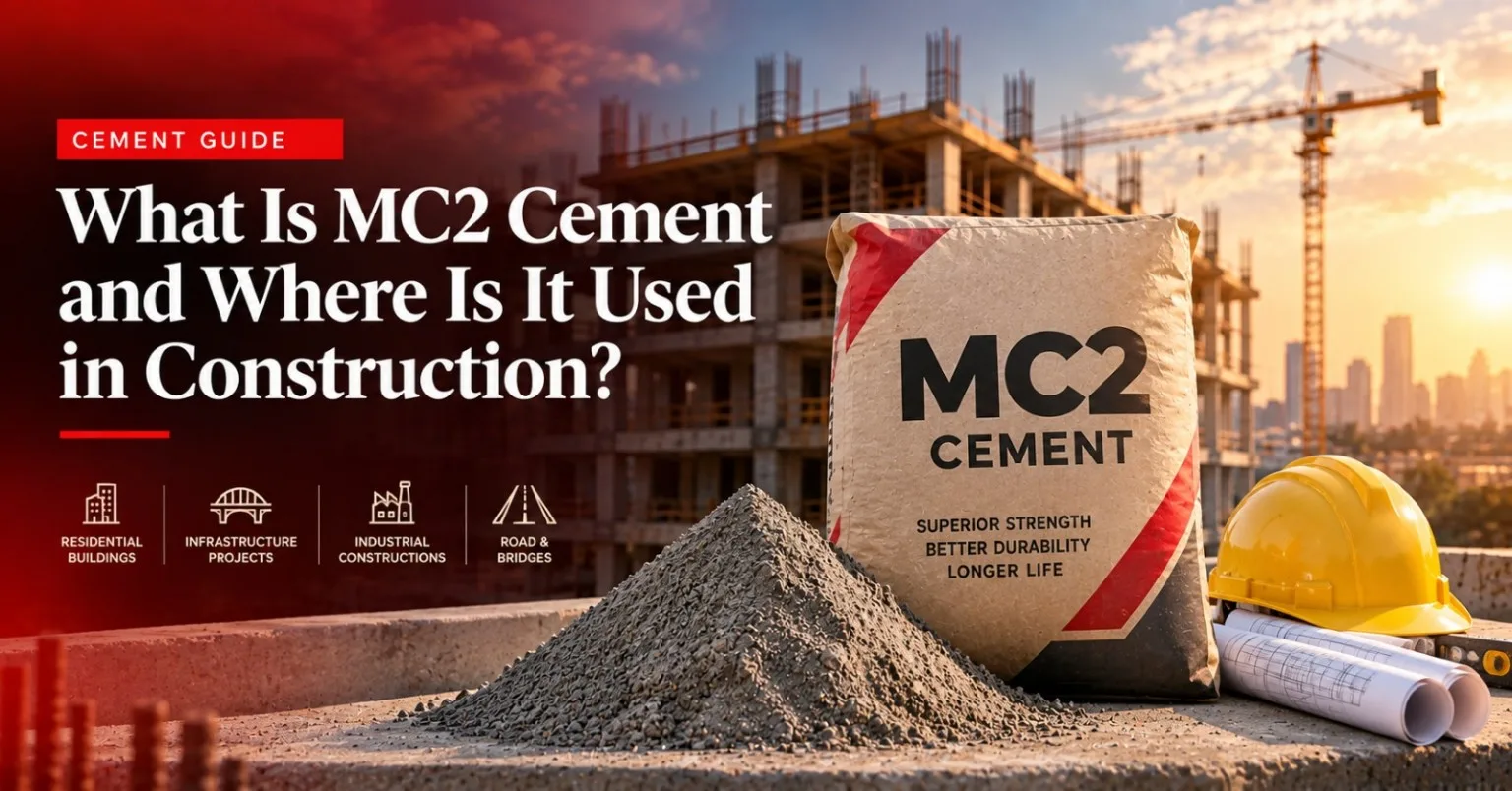
Cement is not a one-product category. Different construction activities can require different cement products depending on the type of work, required performance, and project specifications. One product that is commonly associated with masonry work is MC2 cement, also referred to as masonry cement.
For contractors and construction businesses, understanding where MC2 cement is suitable can make material selection and procurement easier. It is particularly relevant when the project involves masonry, mortar, wall construction, plastering, or other applications where workable cement-based material is required.
If you are looking for MC2 cement in Dubai, it is important to understand its intended application before ordering. Falcon Fame Trading, based in Al Quoz Industrial Area 3, Dubai, supplies MC2/Masonry Cement along with other construction materials, helping contractors discuss their material requirements based on the application, quantity, and project schedule.
What Is MC2 Cement?
MC2 cement is commonly referred to as masonry cement and is used for masonry-related applications where mortar is required.
Masonry cement is a hydraulic cementitious material developed for use in masonry mortar and related applications. ASTM C91/C91M specifically covers masonry cement for situations where mortar for masonry is required and sets requirements for its physical properties.
Unlike choosing cement simply because it is commonly available, masonry cement is selected based on the type of work and the characteristics needed from the mortar.
In practical construction terms, MC2 cement can be considered when the work involves masonry-related activities and the project specification allows its use.
The exact composition, performance characteristics, and applicable requirements can vary by product, so contractors should always check the product information and project specifications before use.
For contractors sourcing MC2 cement in Dubai, providing the supplier with the intended application and project requirements can help ensure that the procurement discussion starts with the correct material information.
Why Is Masonry Cement Used?
Masonry work requires more than simply having a cementitious material available. Mortar needs to be workable enough to place between masonry units and should provide the properties required by the intended application.
Masonry cement is specifically covered by standards for use in masonry mortar. ASTM C91, for example, includes requirements relating to properties such as setting time, compressive strength, air content, and water retention.
This makes masonry cement different from simply selecting a general-purpose cement without considering the application.
For contractors, the main advantage is that the cement can be selected with the intended masonry work in mind rather than treating every construction activity in exactly the same way.
When planning material procurement, Falcon Fame Trading can be approached with details such as the required MC2 quantity, application, project location, and expected delivery schedule.
Where Is MC2 Cement Used?
MC2 cement can be suitable for a range of masonry-related construction activities, depending on the product specifications and project requirements.
Masonry Work
One of the primary areas where masonry cement is used is mortar for masonry construction.
Mortar is used between masonry units to create and maintain the connection between them. Depending on the project, this can involve different types of blocks or other masonry units.
Before using MC2 cement for a particular application, contractors should confirm that the selected product meets the required specifications for the work.
Block Laying
Concrete block construction requires suitable mortar for placing and joining blocks.
MC2 cement can be considered for block-laying applications where masonry cement is specified or permitted. It can be relevant to projects involving solid or hollow concrete blocks and other masonry construction.
The final mortar mix should be prepared according to the applicable project requirements rather than relying on a fixed assumption about the cement-to-sand or water ratio.
For projects requiring both masonry cement and concrete blocks, sourcing multiple material categories from a supplier such as Falcon Fame Trading can also help simplify procurement coordination.
Wall Construction
Masonry walls can be found in residential, commercial, industrial, and other building projects.
When mortar is required for wall construction, masonry cement can be one of the material options considered by the project team. The exact cement and mortar requirements depend on the type of wall, masonry units, exposure conditions, and project specifications.
Repair and Maintenance Work
Some repair and maintenance activities may also involve masonry mortar.
For example, repair work on masonry elements may require compatible mortar for the specific application. However, the existing construction, repair method, and technical requirements should be assessed before selecting a cement product.
MC2 should not automatically be used for every repair simply because the work involves masonry.
Plastering and Related Applications
Masonry cement can also be used in certain plastering or rendering-related applications, depending on the product and applicable specifications.
The suitability of a cement for plastering should be checked against the requirements of the particular application. Different finishes, substrates, environmental conditions, and performance expectations can affect the material selection.
MC2 Cement vs Ordinary Portland Cement
One common question is whether MC2 cement and OPC can be used interchangeably.
The answer is not automatically.
OPC, or Ordinary Portland Cement, is widely used for general construction applications, while masonry cement is specifically designed and specified for masonry mortar applications.
Masonry cement standards focus on properties relevant to mortar, including workability-related characteristics and water retention, alongside strength and setting requirements.
That does not mean MC2 is suitable for every masonry-related job or that OPC is unsuitable for masonry. The appropriate material depends on the mortar specification, project requirements, and the method of construction.
For structural concrete, for example, the cement should be selected according to the concrete specification rather than assuming that masonry cement can be substituted.
For this reason, contractors should clearly communicate the intended application when discussing MC2 or OPC requirements with a construction material supplier in Dubai.
What Are the Main Factors to Consider Before Using MC2?
Selecting MC2 cement should be based on more than the product name.
1. Intended Application
First, identify exactly where the cement will be used.
Is it for block laying, masonry walls, mortar, plastering, repair work, or another application?
This helps determine whether masonry cement is appropriate.
2. Project Specifications
Construction projects may have specific requirements for cement and mortar.
Always check the project drawings, specifications, material approvals, and relevant standards before ordering.
If the project specifies a particular cement or mortar type, that requirement should take priority over a general product recommendation.
3. Masonry Units Being Used
The type of masonry unit can also influence mortar requirements.
Solid concrete blocks, hollow concrete blocks, bricks, and other masonry units may have different requirements depending on the construction method.
The mortar should be appropriate for the masonry system rather than selected independently from the rest of the wall construction.
4. Required Quantity
Quantity planning is another important part of procurement.
A small renovation project may need a limited quantity, while a commercial or residential development may require regular deliveries over a longer period.
Estimating the requirement in advance can help reduce unnecessary delays and make storage and delivery planning easier.
For larger requirements, contractors can discuss the expected quantity and delivery schedule with Falcon Fame Trading before finalising their order.
5. Storage Conditions
Like other cement-based materials, MC2 cement should be stored properly and protected from moisture.
Construction teams should consider their available storage space before ordering large quantities. For projects with regular material consumption, planned deliveries may be more practical than storing the complete requirement on site.
How to Buy MC2 Cement in Dubai
For businesses looking for MC2 cement in Dubai, choosing the right supplier is an important part of the procurement process.
The first step is to clearly communicate the intended application. Instead of simply asking for cement, contractors can provide details such as:
- Required MC2 or masonry cement
- Approximate quantity
- Intended application
- Project location
- Required delivery schedule
- Any project-specific specifications
This gives the supplier a clearer understanding of the requirement.
It is also useful to confirm product availability and delivery arrangements before finalising the order.
Falcon Fame Trading supplies MC2/Masonry Cement from its Dubai operations, along with OPC, PLC and White Cement. The company also supplies concrete blocks, dry mix and mortar, aggregates, sand bags, road base, gypsum products, cement boards, gypsum boards and MDF boards for suitable construction requirements.
For contractors managing several material requirements, discussing these needs with one construction material supplier can make procurement coordination more straightforward.
Why Reliable Supply Matters for Masonry Projects
Masonry work is often connected to the wider construction schedule. Delays in material supply can affect block laying, wall construction, plastering, and other activities that follow.
For this reason, contractors should consider both the product and the supplier’s ability to manage delivery requirements.
Falcon Fame Trading is based in Al Quoz Industrial Area 3, Dubai, and supports construction material supply across Dubai and other UAE locations according to project and delivery requirements.
The company operates with 30+ delivery vehicles, with stated delivery capacities ranging from 3 CBM to 45 CBM, along with 24/7 delivery operations, subject to material availability and specific order and delivery arrangements.
This supply capability can be relevant for contractors requiring MC2 cement alongside other construction materials during different stages of a project.
MC2 Cement for Different Types of Projects
Residential Projects
Residential construction often includes blockwork, internal walls, masonry, plastering, and renovation activities.
MC2 cement may be considered for suitable masonry applications where the project specifications allow it.
For residential contractors, material planning should also take into account the project’s construction stage, required quantity, storage and delivery schedule.
Commercial Projects
Commercial developments can involve larger masonry requirements and planned material deliveries.
For these projects, contractors should consider both the required cement specification and the delivery schedule when planning procurement.
Where several materials are required, a supplier with a broader product range can also simplify communication between procurement and site teams.
Industrial Projects
Industrial construction may have more detailed material specifications.
MC2 should therefore only be selected where it is appropriate for the specified application.
Project teams should review the relevant technical documentation before confirming the material requirement.
Renovation and Fit-Out Projects
Renovation projects can involve repairing or constructing masonry walls, partitions, and other building elements.
The existing substrate and construction method should be considered before selecting the mortar or cement product.
For smaller or phased requirements, contractors may also need to consider storage space and delivery quantities before ordering.
Is MC2 Cement Suitable for Every Construction Application?
No.
This is an important point when choosing construction materials.
MC2 or masonry cement is intended for suitable masonry mortar applications. It should not be treated as a universal replacement for every type of cement used on a construction site.
Structural concrete, specialised concrete applications, masonry mortar, plastering, and finishing work can have different material requirements.
The safest approach is to match the product to the application and follow the project’s technical specifications.
Where a project requires a specific cement standard, grade, or approved material, those requirements should be confirmed before ordering.
What Should Contractors Ask an MC2 Cement Supplier?
Before placing an order, contractors can ask a few straightforward questions:
Is the product suitable for my intended application?
What quantity is currently available?
What product specifications or documentation are available?
Can the required quantity be delivered to my project location?
What delivery schedule can be arranged?
Clear communication at this stage can make the procurement process smoother and reduce misunderstandings.
For contractors discussing an MC2 requirement with Falcon Fame Trading, sharing the application, quantity, project location and delivery schedule can help the team understand the requirement more clearly.
Why Consider Falcon Fame Trading for MC2 Cement in Dubai?
For construction businesses, choosing a supplier involves more than checking whether a particular cement type is available.
Supply capacity, product range, delivery arrangements and the ability to support ongoing project requirements can all influence procurement.
Falcon Fame Trading has more than 36 years of industry experience and supplies several construction material categories from its Dubai operations.
Its cement range includes MC2/Masonry Cement, OPC, PLC and White Cement, while its wider product range covers concrete blocks, dry mix and mortar, aggregates, sand bags, road base, gypsum products, cement boards, gypsum boards and MDF boards.
With 30+ delivery vehicles, delivery capacities from 3 CBM to 45 CBM, and 24/7 operational support, Falcon Fame Trading works with contractors, developers, technical service providers and other construction-related businesses across Dubai and the UAE.
For a specific MC2 requirement, contractors can provide the required quantity, application, project location and preferred delivery schedule to discuss the appropriate supply arrangement.
Conclusion
MC2 cement, commonly referred to as masonry cement, is a cementitious material intended for suitable masonry mortar applications. It can be relevant for block laying, masonry walls, and other construction activities where mortar is required, depending on the project specifications.
The important thing is not simply to ask whether MC2 is a good cement. The better question is whether it is the appropriate cement for the particular application.
Contractors should consider the type of masonry work, project specifications, masonry units, required quantity, storage conditions, and delivery requirements before ordering.
For businesses looking for MC2 cement in Dubai, Falcon Fame Trading can support masonry cement requirements along with OPC, PLC, White Cement and a broader range of construction materials.
With its Dubai base, 36+ years of industry experience, 30+ delivery vehicles, 3–45 CBM delivery capacity and 24/7 operational support, Falcon Fame Trading can discuss material supply requirements according to the project’s application, quantity and delivery needs.
Frequently Asked Questions
1. What is MC2 cement?
MC2 cement is commonly referred to as masonry cement and is used for suitable masonry-related applications where mortar is required. The exact suitability depends on the product specifications and project requirements.
2. Where is MC2 cement used?
MC2 cement can be used for suitable masonry mortar applications, including block laying and wall construction. It may also be considered for certain plastering or repair applications when permitted by the relevant specifications.
3. Is MC2 cement the same as OPC cement?
No. MC2 or masonry cement and OPC are different cement products intended for different applications. Masonry cement is specifically associated with masonry mortar, while OPC is widely used for general construction applications.
4. Can MC2 cement be used for concrete?
MC2 should not automatically be used for concrete simply because it is a cement-based product. Concrete applications have their own material and mix requirements. The project specification should determine which cement is appropriate.
5. Where can I buy MC2 cement in Dubai?
Falcon Fame Trading supplies MC2/Masonry Cement in Dubai along with OPC, PLC, White Cement, concrete blocks, aggregates, dry mix, gypsum products, road base, and other construction materials. Customers can share their required quantity, application, and delivery location to discuss their requirement.