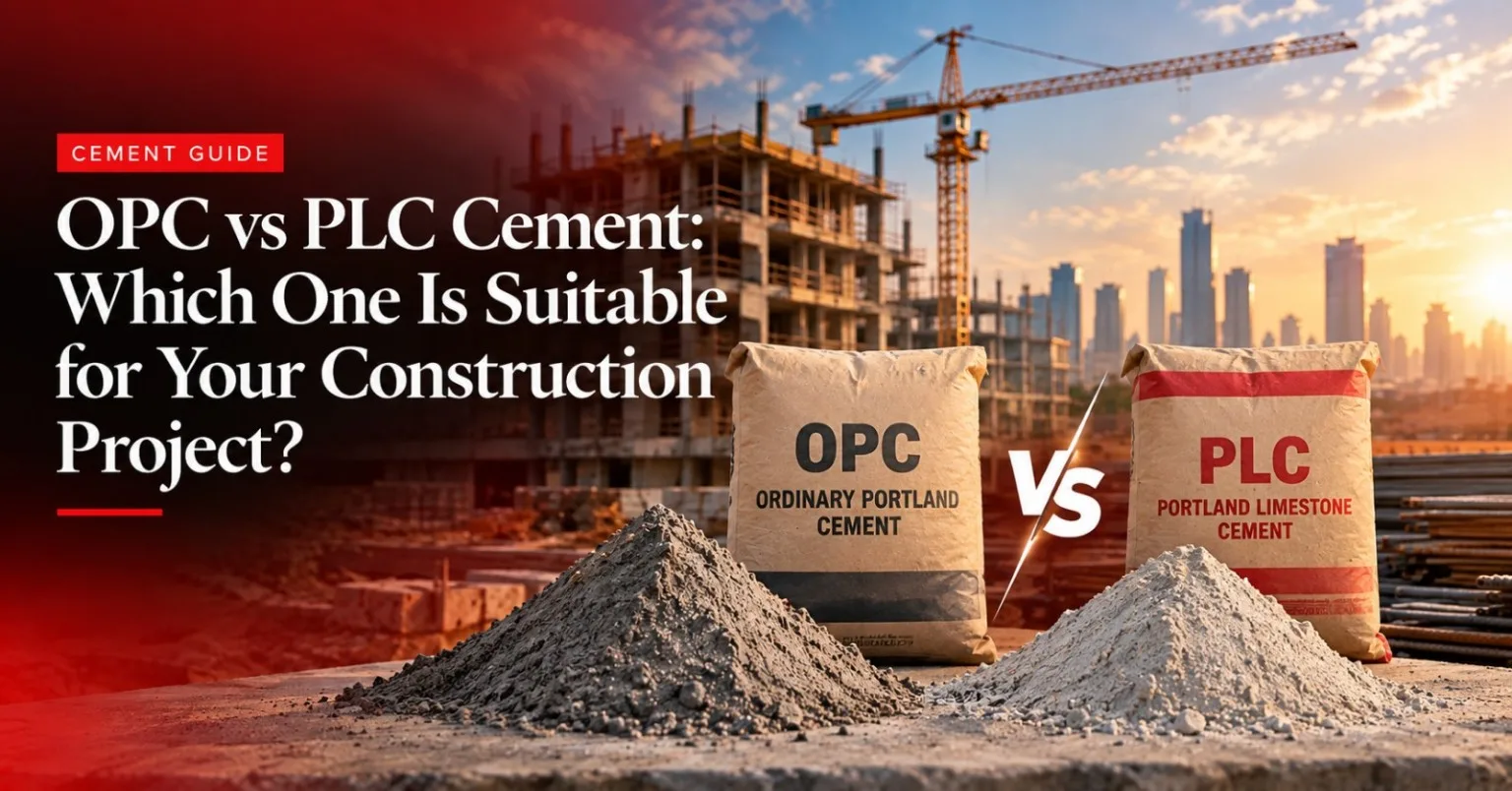
When selecting cement for a construction project, it is easy to come across different options and wonder which one is the right choice. Two commonly discussed types are Ordinary Portland Cement (OPC) and Portland Limestone Cement (PLC). Both are used in construction, but they are not exactly the same.
The right choice depends on the type of construction, project specifications, required performance, applicable standards, and the intended use of the cement. Instead of deciding only by price or general popularity, contractors and project teams should understand how OPC and PLC differ and where each may be suitable.
For businesses looking for OPC cement in Dubai, understanding these differences can also make the procurement process easier. Falcon Fame Trading, based in Al Quoz Industrial Area 3, Dubai, supplies OPC and PLC along with other construction materials, allowing contractors to discuss their cement requirements based on application, quantity, and project needs.
What Is OPC Cement?
Ordinary Portland Cement (OPC) is a widely used cement type for general construction. It is manufactured primarily from Portland cement clinker with a controlled amount of gypsum and is commonly selected where dependable strength development and general construction performance are required.
OPC is used in a variety of applications, depending on its grade and the project specifications. These may include concrete, structural work, masonry-related construction, and other general building activities.
One reason OPC is frequently considered by contractors is its established use across many types of construction. However, the fact that it is widely used does not mean it is automatically the right choice for every application.
The required cement should always be selected based on the technical requirements of the specific project. When sourcing OPC in Dubai, contractors can provide their application, required grade, quantity, and delivery requirements to Falcon Fame Trading for a clearer supply discussion.
What Is PLC Cement?
Portland Limestone Cement (PLC) is a Portland cement in which limestone is incorporated as part of the cement composition within applicable standards.
PLC is used for various construction applications where it meets the project’s required specifications. Its performance characteristics can differ from those of conventional OPC, depending on the formulation and applicable standard.
For contractors considering PLC, the important point is not simply whether PLC is available. The project team should confirm that the cement complies with the required specifications and is appropriate for the intended application.
A supplier such as Falcon Fame Trading can also be approached with the project requirement so that the required cement type, quantity, and delivery arrangement can be discussed before ordering.
OPC vs PLC: The Basic Difference
The main difference between OPC and PLC relates to their composition.
OPC is primarily based on Portland cement clinker and gypsum, while PLC contains a specified proportion of limestone as part of the cement. This difference in composition can influence certain characteristics of the cement, including how it behaves during hydration and how strength develops over time.
For most construction businesses, however, the practical question is:
Which cement is suitable for the work being carried out?
That answer depends on the project rather than the name of the cement alone.
When comparing OPC and PLC for procurement, contractors should therefore look at the required specification first and then discuss the suitable product with their cement supplier in Dubai.
How Do OPC and PLC Compare?
Composition
OPC and PLC differ mainly in the materials used in their cement composition.
OPC contains a higher proportion of Portland cement clinker, while PLC incorporates limestone within the limits specified for the applicable cement standard.
This difference is one of the reasons why the two cement types should not be treated as completely interchangeable without checking the project requirements.
Strength Development
Strength development is an important consideration when choosing cement.
OPC is commonly associated with dependable strength development and is used across many general and structural construction applications. PLC can also provide the required performance when manufactured to the appropriate standard and used in a suitable application.
The actual strength performance depends on factors such as cement composition, grade, concrete mix design, curing, water-to-cement ratio, aggregates, and construction practices.
Therefore, it is not accurate to decide between OPC and PLC based only on a general statement that one is always stronger than the other.
Workability
Workability refers to how easily fresh concrete or cement-based material can be mixed, placed, and handled.
The overall workability of a concrete mix depends on much more than cement type. Mix design, water content, aggregates, admixtures, and placement methods can all influence how the material behaves.
For this reason, contractors should evaluate the complete mix and application instead of assuming that changing from OPC to PLC alone will produce a particular result.
Heat of Hydration
The heat generated during cement hydration can be an important consideration in certain concrete applications.
OPC and PLC can show differences in hydration behaviour because of their different compositions. However, the actual effect depends on the cement formulation, concrete mix, quantity of cement used, environmental conditions, and the size and type of the concrete element.
For projects where heat development is a specific concern, engineers should follow the project specifications and relevant technical guidance.
When Is OPC Cement a Suitable Choice?
OPC may be considered for projects where conventional Portland cement is specified and dependable general construction performance is required.
Potential applications can include:
- General building construction
- Structural concrete where specified
- Foundations and related construction work
- Masonry and other suitable applications
- Commercial construction
- Residential construction
- Industrial construction
The exact cement grade and application should always be confirmed with the project specifications.
For contractors searching for OPC cement in Dubai, it is useful to provide the supplier with the required grade, quantity, intended application, and delivery location rather than simply requesting “cement.”
Falcon Fame Trading supplies OPC cement along with other cement categories, supporting contractors and construction businesses with material requirements based on their project and supply needs.
When Can PLC Be Considered?
PLC can be considered where the project specifications permit its use and its properties are suitable for the intended application.
It can be used in various general construction and concrete applications when the relevant requirements are met.
Before selecting PLC, project teams should review:
- Applicable cement standards
- Project specifications
- Required strength class
- Intended application
- Concrete or mortar mix requirements
- Environmental exposure conditions
- Supplier product documentation
This ensures that the selected cement is appropriate for the work instead of relying on assumptions.
OPC vs PLC for Different Construction Projects
The choice can also vary depending on the type of project.
Residential Construction
Residential projects can involve foundations, columns, slabs, masonry, plastering, and finishing work. The appropriate cement depends on the individual application and project specification.
OPC may be selected where it is specified for general or structural work, while PLC can be considered where the project requirements allow it.
For residential contractors managing several material requirements, sourcing cement alongside other construction materials from a supplier such as Falcon Fame Trading can also simplify procurement coordination.
Commercial Construction
Commercial projects often involve larger quantities and multiple construction stages. Cement selection should be based on the specifications for each application.
Procurement teams should also consider consistent availability and delivery schedules when ordering cement for ongoing work.
Industrial Projects
Industrial construction can involve more detailed engineering requirements. Cement selection should therefore be closely aligned with project documentation and technical specifications.
Where a particular cement type is specified, the supplier should be able to provide the requested product and relevant product information.
Civil and Infrastructure Work
Civil projects may have specific requirements related to strength, durability, exposure, and construction conditions.
In these projects, the cement type should be selected by following the applicable engineering requirements rather than choosing between OPC and PLC based solely on general comparisons.
Is OPC Always Better Than PLC?
Not necessarily.
OPC and PLC are different cement products, and suitability depends on the application. Saying that one is always better than the other oversimplifies the decision.
A cement that is suitable for one construction application may not be the preferred option for another. Project specifications, mix design, required performance, local requirements, and environmental conditions all matter.
The better approach is to ask:
Which cement meets the requirements of this particular project?
This shifts the decision from a simple product comparison to a practical construction decision.
What Should You Check Before Buying OPC or PLC?
Before placing a cement order, contractors and procurement teams should confirm a few important details.
1. Check the Project Specification
Start with the construction drawings, technical specifications, and material requirements provided for the project.
2. Confirm the Cement Type and Grade
Do not assume that all OPC or PLC products are identical. Confirm the exact type and grade required.
3. Consider the Application
Tell the supplier whether the cement is intended for concrete, masonry, general construction, or another specific application.
4. Plan the Required Quantity
Estimate the requirement based on the construction schedule and expected consumption. Large projects may need planned deliveries rather than one large shipment.
5. Check Storage Conditions
Cement needs suitable storage to protect it from moisture and contamination. Ordering should take available storage space into account.
6. Confirm Delivery Requirements
For construction projects, timing matters. Discuss the delivery location, required quantity, preferred schedule, and any site access requirements with the supplier.
Choosing an OPC Cement Supplier in Dubai
Once the required cement type has been identified, the next step is finding a supplier that can support the project requirements.
For businesses sourcing OPC cement in Dubai, it is useful to look beyond the quoted price. Product availability, quantity handling, delivery capability, communication, and experience in construction material supply can all affect the procurement process.
A supplier offering multiple construction materials can also be useful when a project requires cement alongside blocks, aggregates, dry mix, sand bags, gypsum products, road base, or boards.
Falcon Fame Trading supplies OPC, PLC, MC2/Masonry Cement, and White Cement, along with other construction materials for contractors, developers, technical service providers, and construction-related businesses.
Based in Al Quoz Industrial Area 3, Dubai, Falcon Fame Trading supports material supply across Dubai and other UAE locations according to project and delivery requirements. Its operations include 30+ delivery vehicles, capacities ranging from 3 CBM to 45 CBM, and 24/7 delivery operations.
For contractors with recurring or larger cement requirements, these supply and delivery capabilities can be considered alongside product suitability and project specifications.
Making the Right Choice for Your Project
There is no single answer to whether OPC or PLC is the right cement for every construction project.
OPC is a widely used Portland cement option for general construction applications, while PLC offers another Portland cement option that incorporates limestone and can be suitable for applications where it meets the required specifications.
The best way to choose between them is to consider the project specification, application, required performance, cement grade, quantity, storage, and delivery requirements together.
If you are sourcing OPC cement in Dubai, Falcon Fame Trading can assist with cement supply requirements and other construction materials. Share your required cement type, approximate quantity, project location, and intended application with the team so that the supply requirement can be discussed clearly.
Conclusion
Choosing between OPC and PLC cement should be based on the actual needs of the construction project rather than a simple assumption that one type is better than the other.
OPC is widely used for general construction and suitable structural applications, while PLC can be considered where its composition and performance meet the requirements of the project. Factors such as cement grade, mix design, application, project specifications, storage, and delivery should all be considered before ordering.
For construction businesses in Dubai, working with a dependable supplier can also make cement procurement more straightforward. Falcon Fame Trading supplies OPC, PLC, MC2/Masonry Cement, White Cement and other construction materials, supporting contractors and construction businesses across Dubai and the UAE.
Whether the requirement is OPC, PLC, or another cement type, having the correct product and a planned delivery arrangement helps keep material procurement aligned with the construction schedule.
Frequently Asked Questions
1. What is the main difference between OPC and PLC cement?
The main difference is their composition. OPC primarily uses Portland cement clinker and gypsum, while PLC incorporates limestone as part of its cement composition within applicable standards. Their suitability depends on the project and intended application.
2. Is OPC cement suitable for general construction?
Yes, OPC is widely used for general construction applications where its properties and grade meet the project’s requirements. The exact application should always be checked against the project specifications.
3. Can PLC replace OPC in construction?
PLC can be used in applications where it complies with the relevant specifications and is suitable for the intended work. It should not be treated as an automatic replacement for OPC without checking the project’s technical requirements.
4. Which cement should I choose for my construction project in Dubai?
The choice depends on the application, project specifications, required cement grade, performance requirements, and applicable standards. Contractors should review the project requirements before selecting OPC or PLC.
5. Where can I buy OPC cement in Dubai?
Falcon Fame Trading supplies OPC cement in Dubai along with PLC, MC2/Masonry Cement, White Cement, and other construction materials. Customers can share their required cement type, quantity, application, and delivery location to discuss their supply requirements.